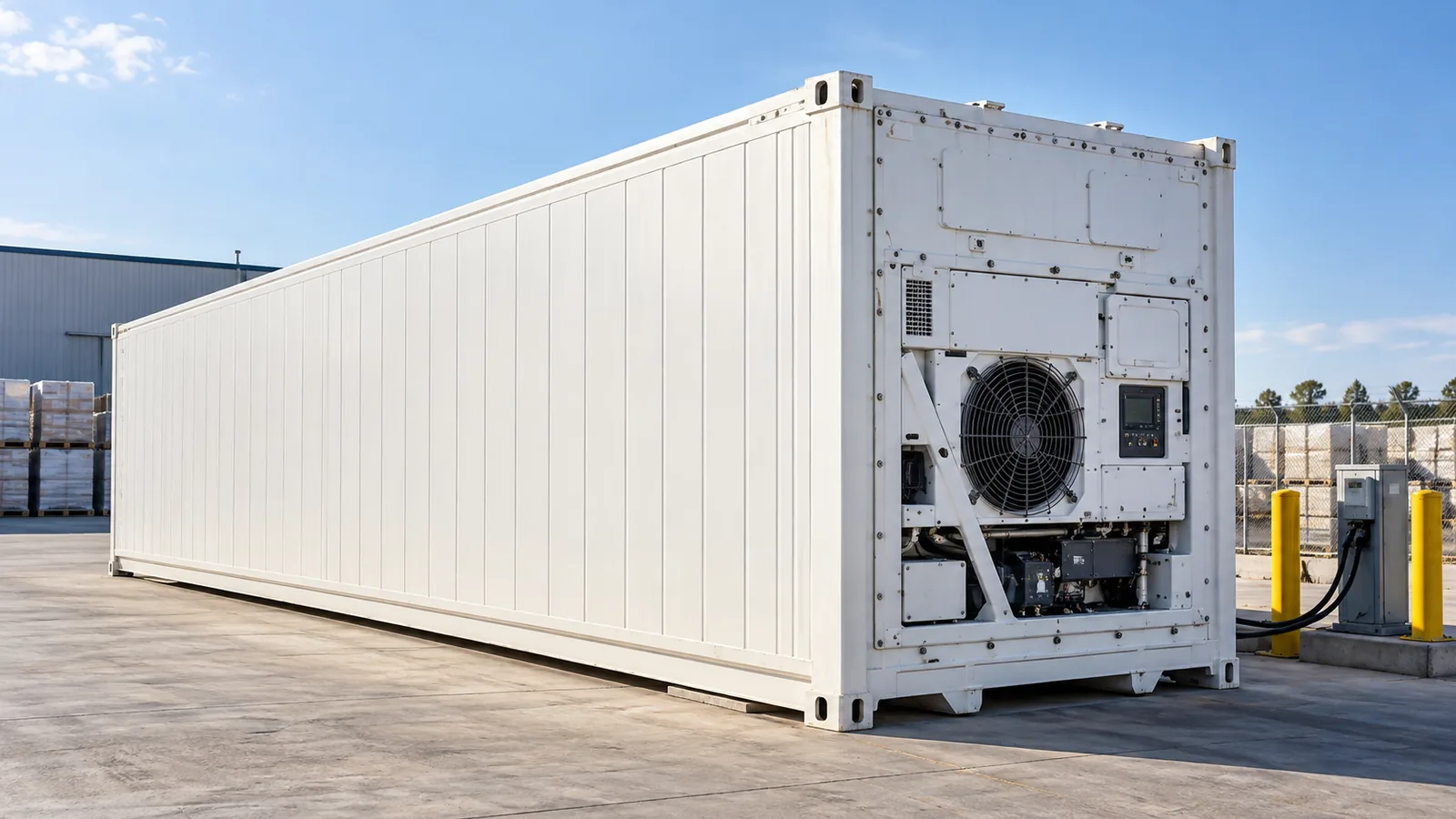

What is a reefer container? A reefer is an insulated shipping container fitted with an integrated refrigeration system. Unlike a standard dry container, it can actively manage the temperature of the air circulating around suitable cargo when it is connected to the correct power source and operated within the unit’s specifications.
That short definition sounds simple, but buying or using a refrigerated shipping container involves more than choosing a size and turning a thermostat. The cargo, required operating range, site power, outside climate, airflow, door-opening pattern, unit condition, monitoring needs, and local compliance requirements all affect whether a particular reefer is suitable.
This guide explains how reefers work, how they differ from dry and insulated containers, what their main components do, and what a U.S. buyer should verify before requesting a quote. It is general educational guidance, not a substitute for the operating manual, a refrigeration technician, an electrician, or the rules that apply to your product.
What does “reefer container” mean?
“Reefer” is industry shorthand for a refrigerated freight container. The container combines a thermally insulated enclosure with mechanical refrigeration equipment mounted at one end. It was developed to move temperature-sensitive goods through intermodal transport systems, but reefer containers are also used for stationary cold storage where the site, power, equipment condition, and intended product support that use.
Thermal containers are a distinct equipment class. ISO 1496-2 covers basic specifications and testing requirements for Series 1 thermal freight containers used in road, rail, and sea transport. A specific reefer’s approval, operating condition, and suitability still need to be confirmed from its identification, documentation, inspection, and intended application.
On the MS Container Solutions website, buyers can review reefer containers for sale in the USA and provide their size, quantity, delivery location, and cold-storage requirements for a project-specific discussion.
How does a reefer container work?
A reefer uses a refrigeration cycle to move heat from inside the container to the outside environment. The exact layout and controls vary by manufacturer and model, but the basic process usually involves a compressor, condenser, expansion device, evaporator, fans, sensors, and a controller.
1. The refrigeration system removes heat
The compressor circulates refrigerant through the system. At the evaporator, the refrigerant absorbs heat from air returning from the cargo space. The condenser rejects that heat outside the container. The expansion stage then prepares the refrigerant to absorb heat again. This cycle continues as the controller calls for cooling.
The refrigeration machinery does not create “cold” as a stored substance. It transfers heat. Its ability to maintain conditions therefore depends on the equipment, insulation, ambient temperature, product heat, air leakage, door openings, and how the load is arranged.
2. Fans circulate conditioned air
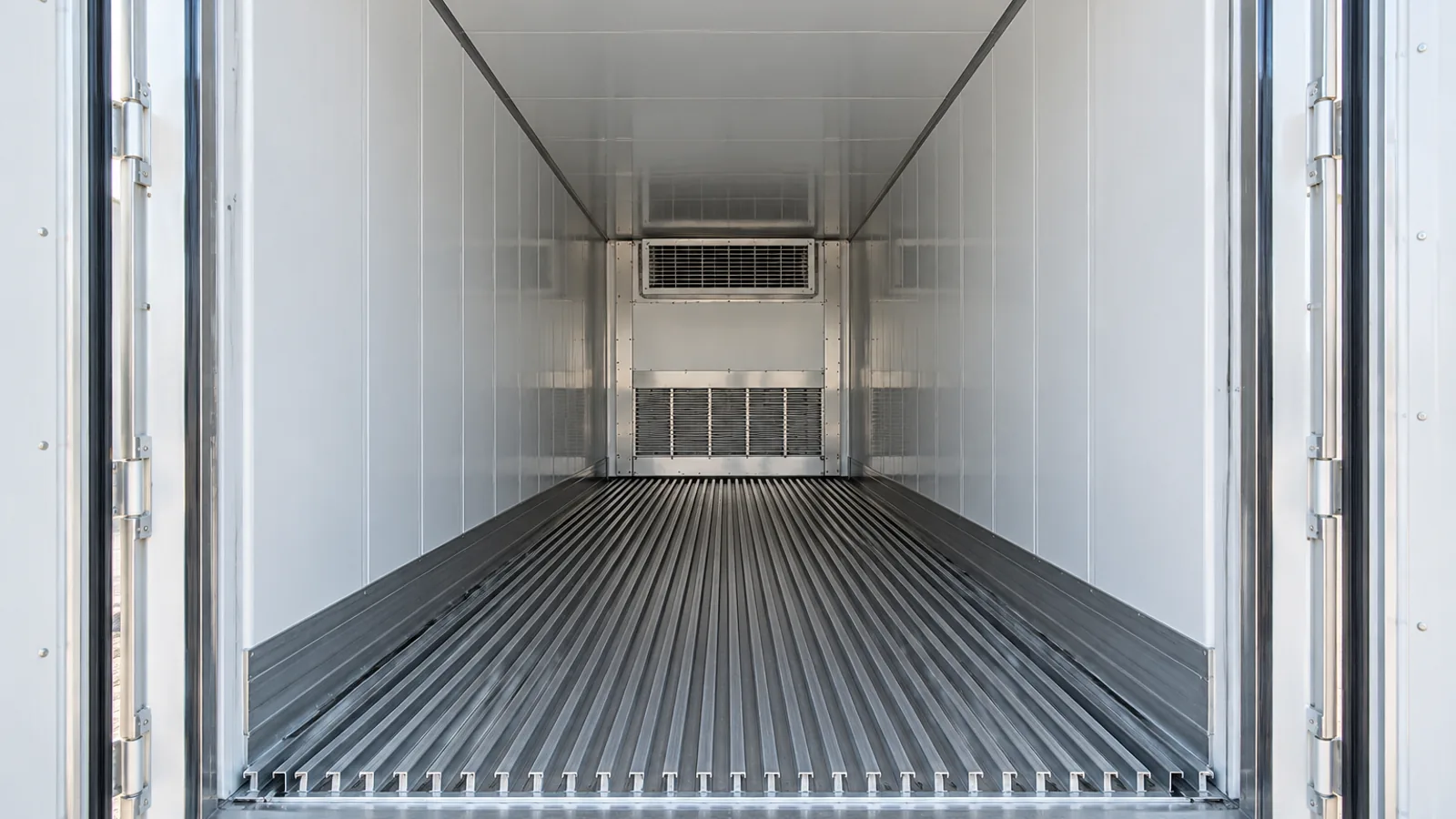
Cooling one small area is not enough. Fans move conditioned air through the reefer interior so that it can travel around the load and return to the refrigeration unit. The aluminum T-floor helps provide a path under the cargo. If boxes, pallets, debris, or damaged flooring obstruct that path, temperature can become less uniform.
Major ocean carriers publish detailed loading rules because airflow matters. For example, MSC’s reefer cargo guidance explains that cargo arrangement and the open T-floor area influence how air circulates around a load. Stationary-storage users should also follow the reefer manufacturer’s instructions and avoid treating the interior like an ordinary room where goods can be packed against every surface.
3. Sensors and the controller manage operation
The controller receives information from temperature sensors and manages the refrigeration components according to the programmed settings and operating logic. Depending on the unit, it may display supply-air temperature, return-air temperature, alarms, operating history, or other data.
A displayed set point is not automatically proof that every product in the container is at that temperature. Air readings can differ from product-core temperature, and conditions can vary across a poorly loaded space. Sensitive or regulated goods may require calibrated independent monitoring, documented procedures, alarm plans, and product-specific validation.
The main parts of a refrigerated shipping container
| Component | Purpose | What a buyer should verify |
|---|---|---|
| Insulated shell | Reduces heat transfer through walls, roof, floor, and doors | Panel damage, penetrations, repairs, water intrusion, and door sealing |
| Refrigeration unit | Moves heat out of the cargo space | Model, condition, service evidence, operating test, and technician support |
| Controller and sensors | Manage settings, readings, alarms, and operating logic | Display function, alarm history, calibration needs, and documentation |
| Fans and air passages | Move conditioned air through and around the load | Fan operation, cleanliness, obstructions, and correct loading clearance |
| Aluminum T-floor | Supports cargo while providing underfloor airflow channels | Crushing, corrosion, debris, standing water, and blocked channels |
| Doors and gaskets | Provide access while limiting air and moisture exchange when closed | Alignment, gasket condition, latch operation, and visible light gaps |
| Electrical connection | Supplies power to the refrigeration system | Exact data-plate requirements, site supply, protection, connector, and electrician approval |
A reefer maintains conditions; it may not be a blast freezer
One of the most important buying distinctions is the difference between maintaining product temperature and rapidly pulling down a warm load. Many freight reefers are designed primarily to hold properly prepared cargo near its specified transport condition. Loading warm product and expecting rapid, uniform chilling can exceed the practical duty of the unit or create uneven results.
Before selecting a reefer, define the thermal task in writing:
- What product or material will be stored?
- What condition will it be in when loaded?
- What air and product temperatures are required?
- How quickly must the product reach that condition?
- How often will doors open, and for how long?
- What is the expected outdoor temperature range?
- Will the unit operate continuously, seasonally, or only during events?
- Is independent temperature logging or an alarm response required?
For food, pharmaceuticals, flowers, laboratory materials, and other sensitive goods, the product owner is responsible for identifying the correct storage conditions and compliance controls. The USDA Food Safety and Inspection Service refrigeration guidance illustrates why temperature requirements and monitoring matter for food; it does not mean one generic setting is appropriate for every product stored in a reefer.
Reefer container versus dry container versus insulated box
These three options are often confused, yet they solve different problems.
| Container type | Active temperature control? | Typical planning priority |
|---|---|---|
| Standard dry container | No | Weather-resistant general storage, ventilation, and moisture control |
| Insulated container or inactive reefer shell | No, unless separate equipment is added and engineered | Slower heat transfer, interior condition, and the intended non-refrigerated use |
| Operating reefer container | Yes, when correctly powered and serviceable | Thermal duty, machinery condition, airflow, power, monitoring, and maintenance |
A non-operating reefer can still have an insulated interior, but it should not be sold or planned as active cold storage unless the cooling system and supporting infrastructure are confirmed. Conversely, a dry container should not be described as refrigerated merely because portable cooling equipment has been placed nearby.
If temperature control is not required, compare the broader range of shipping containers for sale. For ordinary storage, our guide on preventing shipping container condensation explains moisture controls that apply to dry-container use.
Common reefer container sizes
Reefers are commonly identified by nominal container length and height, such as 20-foot units and 40-foot high-cube units. However, insulation and refrigeration machinery take up space, so the usable internal dimensions and capacity differ from a standard dry container of the same nominal length.
Do not rely on a generic size chart for a purchase decision. Ask for the exact unit’s specification, internal dimensions, door opening, weight, electrical data, and machinery model. Confirm that the load, shelving, pallet pattern, personnel access, and required airflow can all fit without blocking the manufacturer’s clearance zones.
Buyers comparing the site footprint can use the 20ft versus 40ft shipping container guide as a general starting point, then request reefer-specific measurements before finalizing the layout.
Where are reefer containers used?
Operating reefers may support cold-chain transport or stationary storage for products that require controlled conditions. Applications can include food distribution, agriculture, floristry, events, catering support, certain medical or laboratory supplies, and commercial inventory. Suitability depends on the specific product, rules, unit capability, cleanliness, monitoring, and site setup.
A reefer should not be assumed to be food-grade, pharmaceutical-qualified, or approved for any regulated use based on appearance alone. Previous cargo, interior hygiene, materials, calibration, traceability, cleaning procedures, and compliance documentation may all matter. Buyers should have the responsible quality, safety, or regulatory professional approve the planned use.
Reefer container power requirements must be verified
An active reefer needs a compatible, reliable electrical supply. Power arrangements vary by unit, manufacturer, market, and configuration, so the exact requirement must come from the data plate and documentation for the container being offered. Do not assume that a standard household outlet will operate industrial refrigeration machinery.
Before purchase, provide the data-plate information to a qualified electrician and confirm:
- Required voltage, phase, frequency, and connection type
- Available site capacity and dedicated circuit protection
- Safe cable routing and protection from vehicles, weather, and damage
- Disconnects, grounding, and applicable electrical-code requirements
- Backup power or contingency procedures if product loss is a risk
- Whether the delivery location permits the proposed installation
The electrical plan should be ready before the container arrives. A working reefer with the wrong power infrastructure is not usable cold storage, and improvised adapters or wiring can create serious safety and equipment risks.
Airflow, loading, and door openings affect performance
A reefer’s refrigeration system conditions circulating air. That air needs a clear path. Cargo that blocks the T-floor, presses against the machinery bulkhead, extends beyond marked limits, or leaves uncontrolled bypass gaps can interfere with uniform circulation. The correct loading pattern depends on the product, packaging, pallet arrangement, and the reefer manufacturer’s instructions.
Door openings introduce warm, humid air and can place additional load on the system. For stationary use, plan receiving and picking so the doors are open only as long as necessary. Strip curtains, an anteroom, dock arrangement, or operational procedures may help in some projects, but they should be designed around hygiene, safety, workflow, and product requirements.
Do not drill shelves, wiring, drains, or accessories through insulated panels without an approved plan. Penetrations can compromise the thermal envelope, create moisture paths, and make future cleaning or repair more difficult.
What to check before buying a reefer container
A reefer purchase evaluates two systems at once: the container body and the refrigeration machinery. A clean exterior does not prove the cooling equipment works, and a controller that powers on does not prove the insulated shell is sound.
Confirm the exact unit and intended duty
- Container identification and nominal size
- Refrigeration-unit manufacturer, model, and serial information
- Available operating and service documentation
- Required thermal duty and ambient conditions
- Active refrigeration versus insulated-shell-only use
Inspect the insulated container body
- Exterior structure, corner posts, roof, and lower rails
- Interior panels for punctures, separation, stains, odors, or repairs
- Door alignment, hinges, locking gear, and gaskets
- T-floor condition, drainage points, cleanliness, and airflow channels
- Evidence of water intrusion or damaged insulation
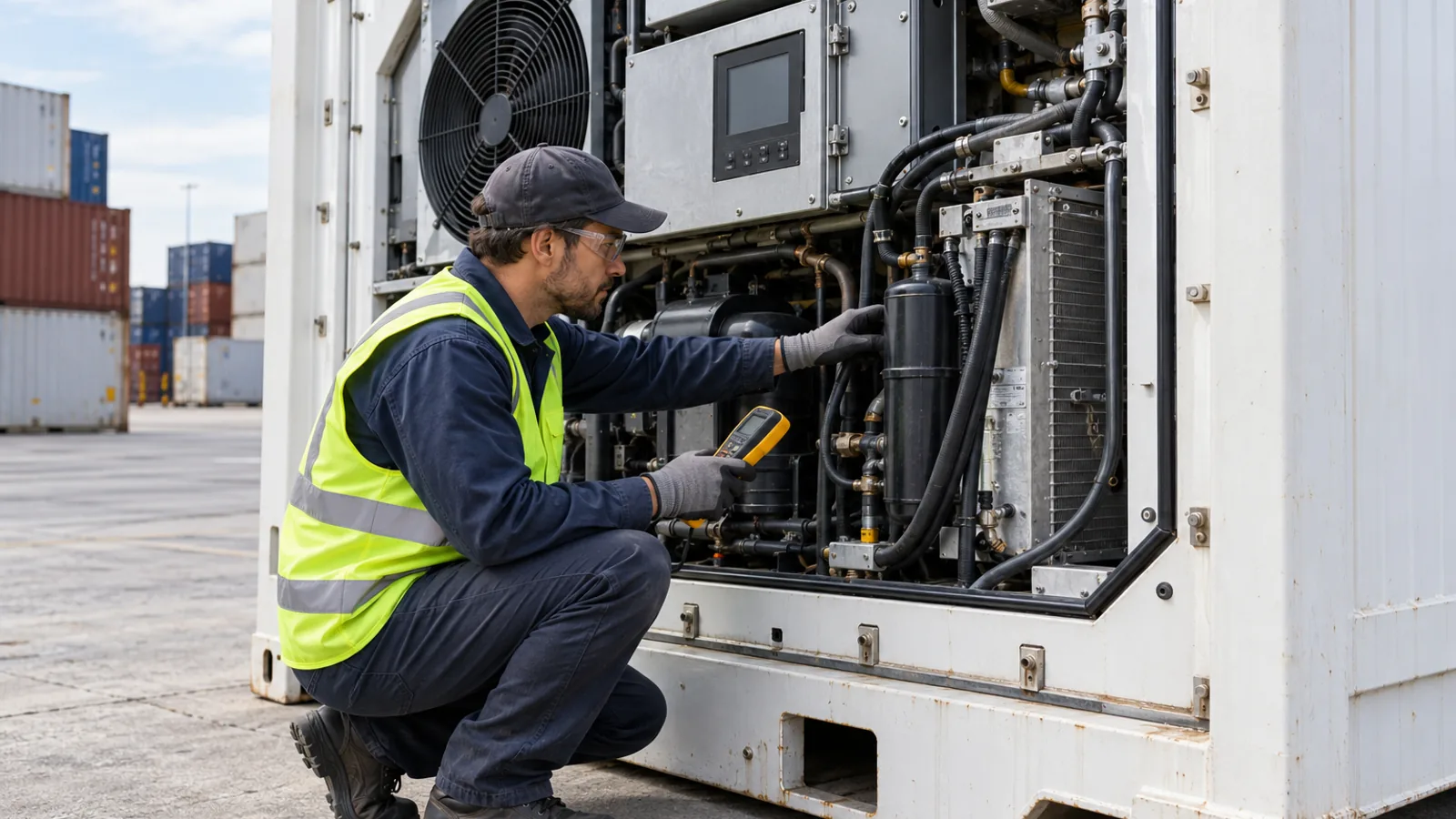
Have the machinery assessed under operation
- Controller display, sensors, fans, compressor, and condenser
- Visible leaks, damaged cables, corrosion, unusual noise, or vibration
- Alarm history and available service records
- Pre-trip inspection or other documented testing appropriate to the use
- Ability to operate under an agreed test rather than merely powering on
Because refrigeration systems contain electrical and mechanical hazards, testing should be completed by qualified personnel with the correct supply and procedures. A buyer should not open energized compartments or attempt an improvised cold-run test.
New versus used reefer containers
A newer unit may offer cleaner presentation, more remaining equipment life, and fewer unknowns, but the actual specification and support still need confirmation. A used reefer can be a practical option when its condition, operating history, test results, and intended duty are understood. Age alone does not tell the whole story.
When comparing quotes, separate the value of the box from the value and condition of the refrigeration system. Ask what “working,” “tested,” “as-is,” “insulated storage,” and any condition grade mean in writing. A non-operating unit priced as an insulated shell is a different product from a tested active reefer.
The general new versus used shipping container guide explains broader condition trade-offs, but a reefer requires additional machinery, insulation, electrical, and operational checks.
Site preparation and delivery planning
A reefer needs a stable, accessible position with room for doors, machinery service, airflow around the refrigeration end, and safe electrical infrastructure. The surface, drainage, route, overhead restrictions, and final orientation should be confirmed with the delivery coordinator.
Keep service access in mind. Placing the machinery end against a wall may make inspection or repair difficult. The power connection should also be protected without blocking ventilation or creating a trip or vehicle hazard. Review the shipping container delivery site-preparation checklist and add the reefer-specific power and service-clearance requirements supplied for the chosen unit.
Questions to include in a reefer quote request
A clear brief helps the seller distinguish an active cold-storage project from a request for an insulated shell. Include:
- Preferred size and quantity
- Delivery ZIP code and site-access notes
- Product or material to be stored
- Incoming product condition and required operating range
- Expected ambient conditions and door-opening frequency
- Available electrical supply and electrician review status
- Monitoring, alarm, documentation, or compliance needs
- Whether new, used, or insulated non-operating options may be considered
Pricing depends on the actual unit, equipment condition, specification, delivery, site, and project requirements. The general shipping container cost guide explains why container and delivery quotes vary, but reefer machinery and testing add another layer of project-specific factors.
Is a reefer container right for your project?
A reefer may be appropriate when you need an insulated, relocatable enclosure with active temperature management and you can support it with the correct power, monitoring, maintenance, loading practices, and professional oversight. It may be more equipment than you need when the goods only require weather-resistant dry storage. An inactive insulated shell may fit some non-refrigerated uses, but it should not be mistaken for operational cold storage.
Start with the product requirements, not the container. Once the thermal duty, site, power, monitoring, size, and condition preferences are clear, use the MS Container Solutions quote form to request current reefer options for your U.S. delivery location.
A reefer container is used to transport or store temperature-sensitive goods when the specific unit, site, power supply, airflow, monitoring, and product requirements support the application. Uses may include food, agricultural products, flowers, and other commercial inventory, subject to the applicable safety and compliance rules. An operating reefer requires a compatible electrical supply or another approved power arrangement. The exact voltage, phase, frequency, connector, circuit protection, and capacity must be verified from the unit’s data plate and reviewed by a qualified electrician. Do not assume a freight reefer is a blast freezer. Many reefers are intended primarily to maintain properly prepared cargo near its specified condition. Pull-down capability depends on the unit, product, load, ambient conditions, airflow, and operating specifications. A working reefer combines insulation with active refrigeration equipment. An insulated container or non-operating reefer shell can slow heat transfer but does not actively control temperature unless a suitable engineered system is installed and commissioned. Verify the exact unit, insulated shell, doors and gaskets, T-floor, controller, sensors, fans, refrigeration machinery, alarm or service history, electrical requirements, and performance under an appropriate qualified test. Confirm in writing whether it is sold as an operating reefer or as an insulated shell.Frequently Asked Questions
What is a reefer container used for?
Does a reefer container need electricity?
Can a reefer container freeze warm products quickly?
What is the difference between a reefer and an insulated container?
What should I check before buying a used reefer container?