
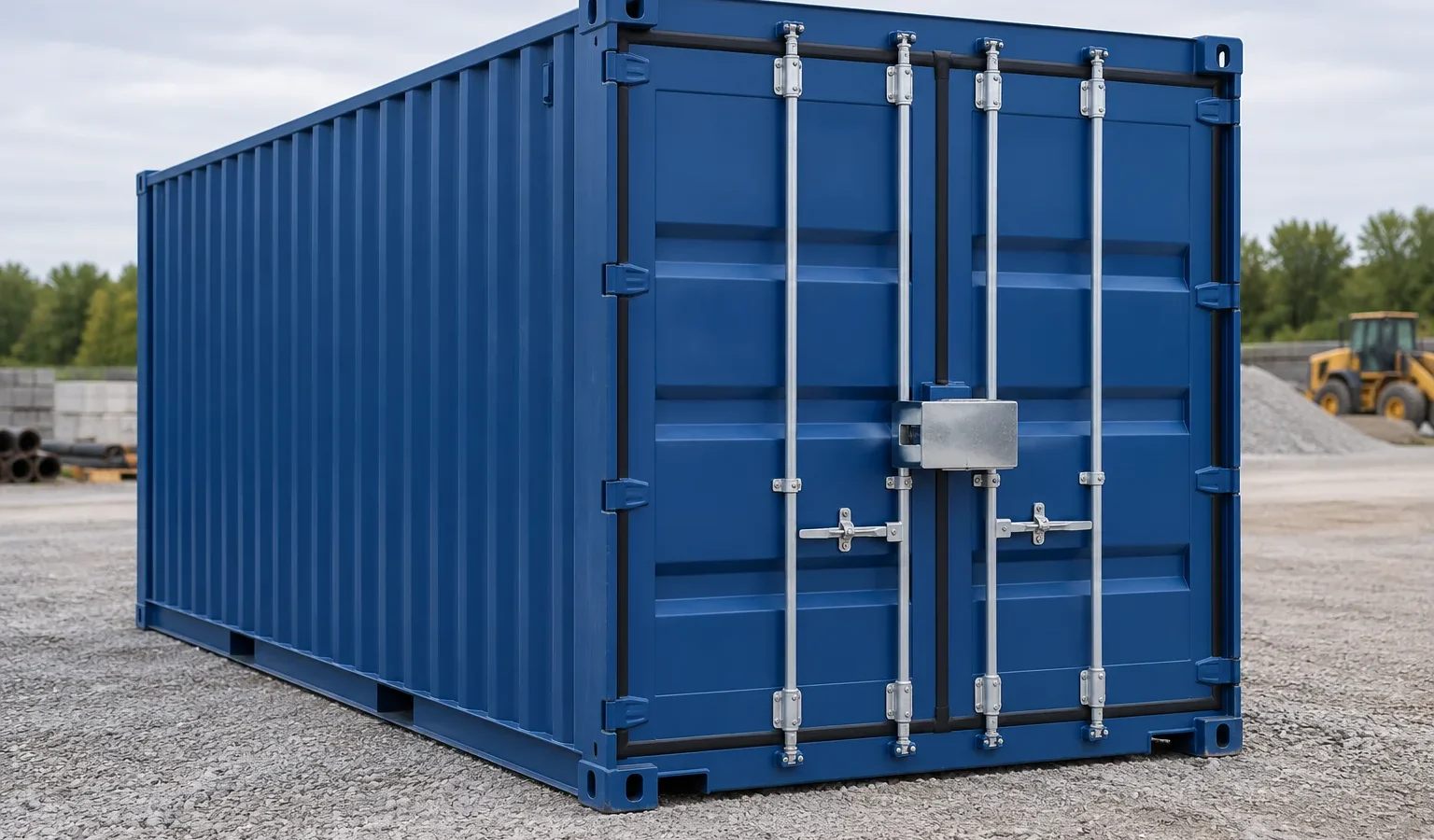

A shipping container is a strong starting point for jobsite, business, and property storage, but its security depends on the door hardware, the lock you choose, and how the container is used on site. The practical answer to how to secure a shipping container is to begin with sound cargo doors, protect the lock from direct attack, and add site controls that fit the value and risk of what you store.
There is no single add-on that makes every container theft-proof. A good setup makes unauthorized entry more difficult, more time-consuming, and more visible while keeping daily access workable for the people who need it. This guide helps U.S. buyers compare the most useful door-security choices before ordering a container or fitting upgrades to one they already own.
Start With a Container Whose Doors Work Properly
Security hardware cannot compensate for badly damaged doors or a distorted frame. During a pre-purchase inspection, open and close both cargo doors. The locking bars should turn without excessive force, the cam keepers should engage fully, and the handles should sit in their retainers. Look for bent bars, cracked welds, damaged hinges, missing handle retainers, and corrosion that affects movement or the door gasket.
This is especially important on a used unit. A container can be a sensible storage purchase with cosmetic wear, but the door end needs to remain functional and reasonably square. Our used shipping container inspection checklist covers the wider condition review, including roof, floor, seals, and frame. If you are deciding between condition levels, compare used shipping containers with new one-trip containers based on your use, budget, and desired door condition.
Why a Bare Padlock Is Usually the Weak Point
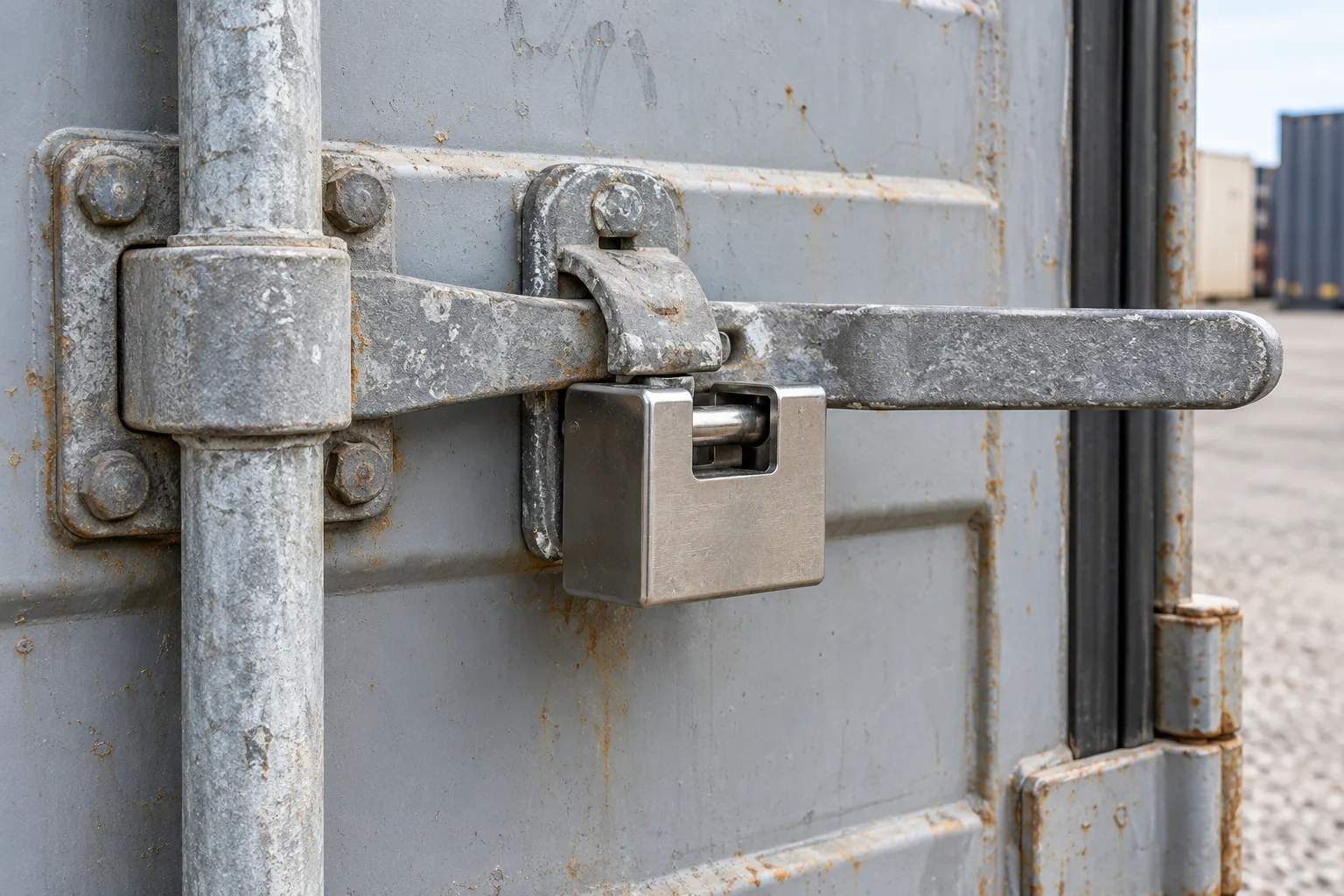
Standard cargo doors use vertical locking bars operated by external handles. A padlock can be placed through compatible hardware, but an exposed shackle gives a person and a cutting tool direct access. That does not make a padlock useless; it simply means the lock choice and its protection matter more than the container wall alone.
For stored tools, materials, equipment, or business inventory, assess the exposed portion of the lock, not just the advertised lock body. A closed-shackle or puck-style lock may leave less accessible shackle than a conventional padlock. It must still fit the door hardware or lockbox and operate in the weather conditions at the site. Do not force a lock that prevents the handles from fully seating or interferes with normal door operation.
Choose a Lockbox When You Need Better Lock Protection
A lockbox is a welded steel housing that shields the padlock around the cargo-door locking area. Its purpose is not to turn the container into a vault; it reduces direct access to the lock and makes common attacks less convenient. The lockbox, lock, and door hardware must work as a system. A poorly positioned box or an incompatible lock can make the container difficult to open—or leave the lock more exposed than expected.
Ask the seller whether a lockbox is already fitted, whether it is included for the particular container, and which lock shapes fit it. Do not assume that every one-trip or used unit has the same security hardware. If a lockbox is being added to an existing container, use an experienced fabricator and confirm the container will remain suitable for its intended use. The Transported Asset Protection Association locking-systems guidance similarly emphasizes substantial, tamper-evident locking devices for higher-risk cargo operations.
Match the Security Level to What Is Inside
| Storage Situation | Practical Starting Point | Useful Next Step |
|---|---|---|
| Low-value seasonal storage on a visible property | Working doors and a weather-suitable, heavy-duty lock | Keep the door end visible and maintain clear access |
| Tools or materials on an active jobsite | Protected lock or lockbox plus controlled keys | Lighting, a camera or alarm appropriate to the site, and an inventory routine |
| Higher-value business inventory | Lockbox with compatible security lock and routine door inspection | Layered site security, access records, and insurer-specific review |
Security should reflect the contents, the site’s visibility, the length of time the container is unattended, and local risks. A lockbox is often a sensible upgrade, but it should not replace perimeter security, lighting, access management, or an appropriate insurance conversation. Keep serial numbers, photos, and a current inventory outside the container so there is a useful record if something goes wrong.
Add Layers Beyond the Door
Most practical container security is layered. Put the door end where routine activity, lighting, or a camera can see it when the site allows. Keep brush, stacked materials, and parked equipment from creating an easy hidden work area around the doors. Decide who has keys, avoid leaving spare keys in predictable places, and remove access when staff or contractors no longer need it.
For a project site, a door sensor, alarm, or camera can add notice rather than physical resistance. These systems vary in power, connectivity, and suitability for a remote location, so select them for the actual site rather than assuming an indoor product will work outdoors. If the container is part of a broader site plan, consider security during delivery and placement too; the delivery site preparation checklist is a useful starting point for access and ground conditions.
Inspect Door Security as Part of Regular Maintenance
A strong lock does not help if the locking bars seize, the cam keepers are loose, or the door gasket lets water reach the stored contents. Include the door end in a seasonal check: operate both doors, inspect hinges and locking bars, remove debris that blocks the threshold, and look for fresh corrosion or loose hardware. Keep lubrication and coating work suitable for the components involved, and use a qualified repair professional when damage affects safe operation.
Take extra care before opening doors when a container has been packed tightly or stored materials could have shifted. International Maritime Organization guidance notes that cargo may press against doors and recommends cautious opening procedures where that is a risk. That is a safety issue separate from theft prevention, but it is one more reason to keep the door mechanism functional and never force it.
Questions to Ask Before You Buy
- Are the cargo doors, locking bars, handles, hinges, and cam keepers in working condition?
- Does this exact container include a lockbox, or is it an additional option?
- Which lock type fits the supplied door hardware or lockbox?
- Is the container intended for tools, inventory, seasonal storage, or another use with a different risk level?
- Where will the door end face, and will lighting, cameras, or routine activity make it visible?
- Will the selected security hardware remain practical for every authorized user?
Container size also affects how you use the unit and the amount of inventory or equipment at risk. Compare 20ft shipping containers and 40ft shipping containers based on the storage plan, not security alone. When you are ready to discuss a container and the site it will serve, request a shipping container quote with the size, condition preference, delivery ZIP, and security needs.
Keep Security Choices Practical for Daily Use
The most effective setup is one authorized people will actually use correctly every day. Before buying hardware, think through who opens the container, how often they need access, whether the site is dark or wet at certain times, and what happens if a key is misplaced. A lock that is difficult to operate in normal conditions can lead people to leave a door unsecured or use an unsuitable substitute.
Build a simple handoff routine for keys and access codes, especially where multiple crews or vendors use the container. Recheck the lock after severe weather and after any impact near the door end. If stored contents are unusually valuable or regulated, ask the insurer or the relevant authority which controls apply; their requirements may go beyond a general container-security guide.
Frequently Asked Questions
What is the best lock for a shipping container?
The right lock depends on the door hardware and the risk at the site. For many storage uses, a weather-suitable, heavy-duty lock that fits the container’s hardware or lockbox is a sensible starting point. Avoid choosing a lock by appearance alone; check fit, shackle exposure, and whether the doors can close and operate normally.
Is a lockbox worth adding to a shipping container?
A lockbox can be worthwhile when you want to shield a compatible padlock from direct access. It is most useful as part of a layered plan that also includes working door hardware, sensible placement, and site controls appropriate to the contents.
Can I add a lockbox to a used shipping container?
Often, a lockbox can be professionally fitted to a used container, but first inspect the doors and frame. Confirm the proposed hardware is compatible with the locking bars and will not prevent proper door operation.
Do shipping container doors need regular maintenance?
Yes. Operate the doors periodically and inspect locking bars, handles, hinges, cam keepers, gaskets, and corrosion. Address damage that affects safe operation before relying on the container for secure storage.
Should I use a camera or alarm with a shipping container?
A camera, alarm, or door sensor can provide notice and support a broader site-security plan. Choose equipment based on power, connectivity, weather exposure, and the actual risk at your location; it does not replace sound door hardware and a suitable lock.