
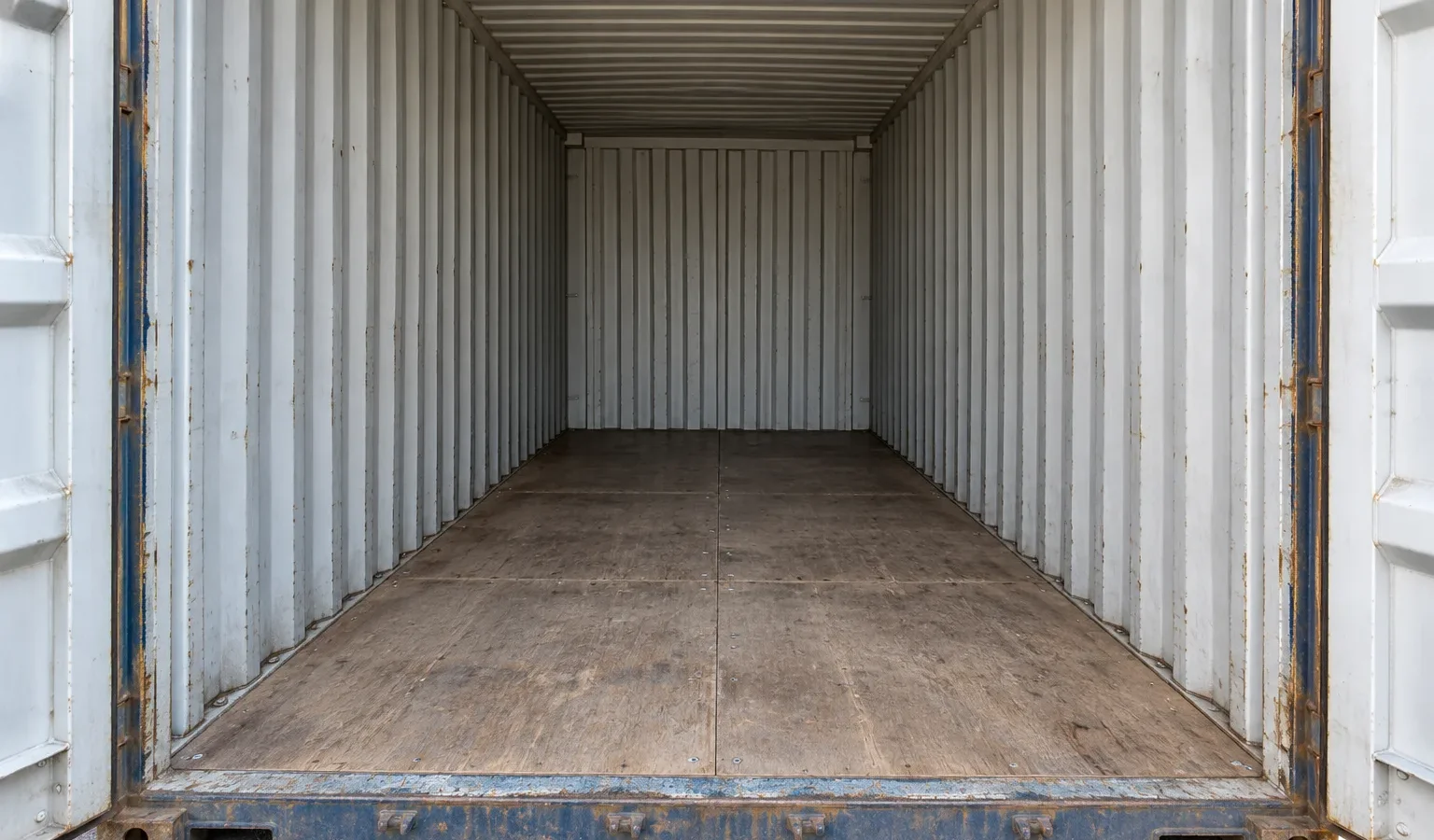

The floor is easy to overlook when comparing shipping containers, but it deserves the same attention as the roof, doors, and corner frame. A sound floor supports stored equipment and inventory, keeps the interior usable, and can reveal water intrusion or hard service long before it is obvious from outside. Checking shipping container floor condition before you buy helps you select a unit that matches the job rather than simply the lowest initial price.
Most buyers do not need a flawless floor. Used containers commonly show scuffs, staining, forklift marks, patches, and color variation. The real question is whether the floor is dry, solid, secure, and appropriate for the intended storage or project. This guide explains what to inspect and when to ask for more information.
What Is Under a Shipping Container Floor?
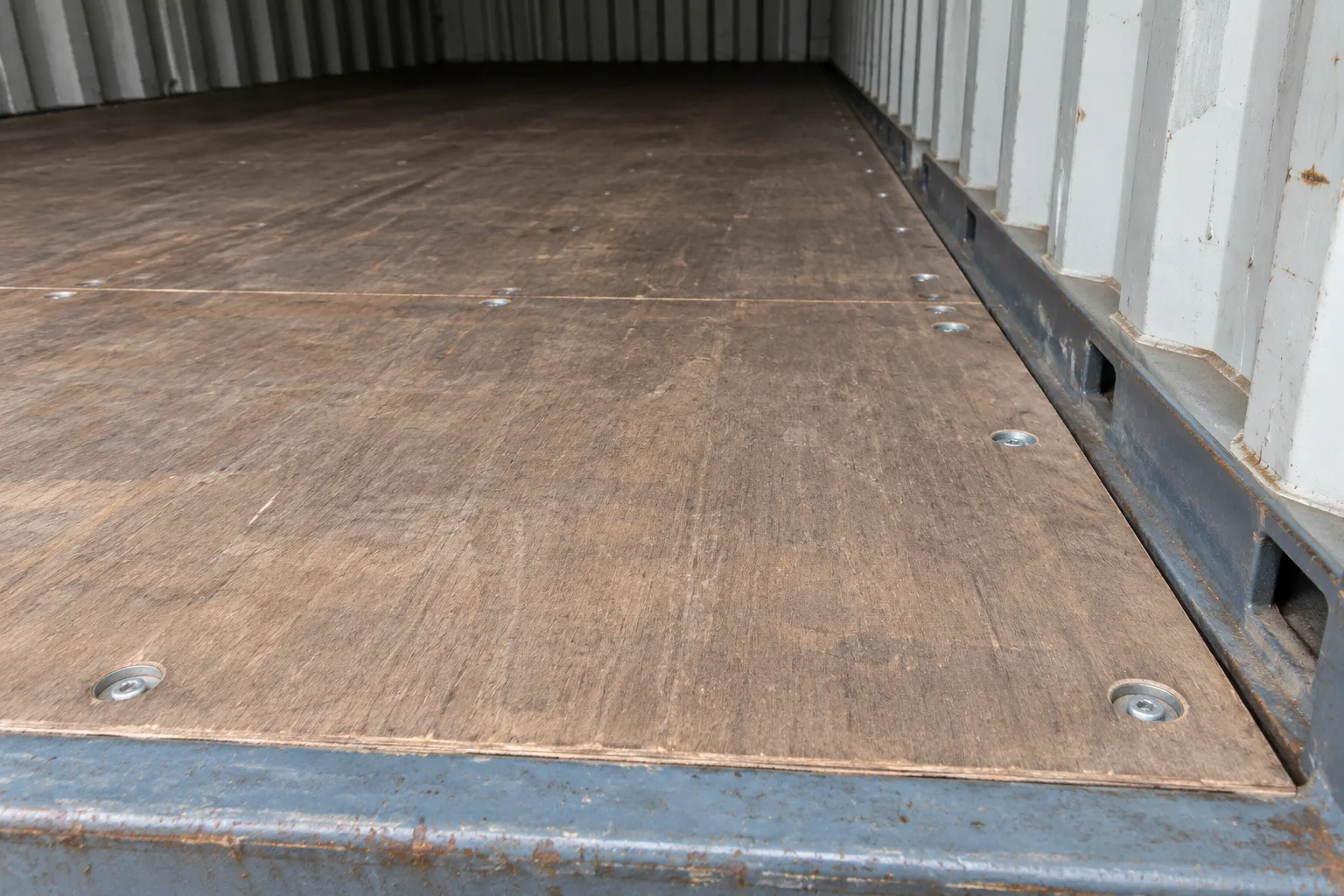
Many freight containers use a heavy-duty plywood floor supported by steel cross members. The exact material, treatment, thickness, repairs, and service history can differ by container and age, so do not assume every unit is identical. For a storage purchase, concentrate on observable condition: the floor should feel firm underfoot, lie reasonably flat, and show no holes or areas that flex under normal walking.
Floor condition is connected to the rest of the container. Water entering through a damaged roof, door gasket, wall, or threshold can affect the floor over time. That is why a floor check belongs in a full used-container inspection, not as a stand-alone test. Review our used shipping container inspection checklist for a broader roof, door, frame, and interior review.
How to Inspect a Container Floor Before You Buy
Start at the cargo-door threshold and walk the full length of the container. Use a flashlight where daylight is limited and take your time around the door end, edges, and any visibly repaired area. You are looking for changes in feel as well as visible damage.
- Walk the surface: Notice soft spots, unusual flex, raised edges, or uneven sections.
- Check for holes and deep damage: Forklift contact and loading wear can leave marks; holes, major splits, or damaged areas that expose the structure require a closer review.
- Look for water evidence: Darkening, persistent dampness, mold-like odor, or fresh staining can point to moisture that should be traced to its source.
- Inspect repairs honestly: A repair is not automatically disqualifying. Ask what was repaired, whether the area is firm, and whether it suits your planned use.
- Check the perimeter: Examine where plywood meets the side rail and threshold for lifting, gaps, or damage.
Do not rely on photos alone when the floor matters to your project. If an in-person inspection is not practical, request current photos and a clear description of the actual unit’s condition. The empty-container inspection standards from Grain Trade Australia also identify floor gouges and related inspection considerations.
Normal Used-Container Wear vs. Buyer Red Flags
| Common Finding | What It May Mean | Practical Buyer Response |
|---|---|---|
| Scuffs, surface marks, or color variation | Typical loading wear | Confirm the surface remains solid and dry. |
| Small, sound repair patch | Prior localized repair | Ask for details and assess it against your use. |
| Softness, movement, or lifting board edges | Possible moisture damage or deterioration | Investigate before accepting the unit. |
| Holes, severe gouges, or recurring dampness | Condition problem that may affect storage and safety | Discuss repair needs or choose a different unit. |
A used container can still be a practical storage option with cosmetic floor wear. The distinction is function. If you plan to store palletized goods, tools, or business inventory, a firm and dry floor is usually more important than uniform appearance. If the planned use is more specialized, describe it before requesting a quote so the supplier can help match the condition level to the application.
Match the Floor to Your Intended Use
For general outdoor storage, many buyers prioritize a wind- and water-resistant container with a sound floor, working doors, and a condition level that fits the contents. A 20ft shipping container can be a manageable choice for tools and equipment, while a 40ft shipping container gives more interior length for larger inventory plans.
For a conversion or a use involving finished interior surfaces, ask additional questions about prior cargo, odors, staining, and any floor treatment. Do not make health or material assumptions from a general guide; use qualified professionals when a project has specific building, environmental, or occupancy requirements. A one-trip unit may be worth considering when a cleaner-looking interior and less prior service are priorities. Compare new one-trip containers with used shipping containers based on actual use and condition expectations.
Protect a Sound Floor After Delivery
Good site preparation helps protect the floor indirectly by supporting the container correctly and keeping water from collecting around the rails and door end. Plan access before delivery, maintain drainage, and avoid a placement surface that leaves the container in standing water. See the shipping container delivery site preparation guide for practical ground and access considerations.
Inside the container, keep stored materials dry, avoid dragging sharp or heavy items across the floor, and inspect promptly after a roof leak or flood event. Periodic checks are simpler and less expensive than discovering deterioration after the container is full. Our container maintenance checklist can help you build a recurring exterior and door inspection routine.
Questions to Ask on a Quote Request
- Is the offered unit new/one-trip or used, and what condition standard applies?
- Can you confirm the floor is sound and suitable for my planned storage use?
- Are there known patches, holes, soft spots, stains, or odor concerns?
- Can I receive current photos of the actual container where available?
- What size best fits my inventory and delivery site?
When you are ready, request a shipping container quote with the desired size, condition preference, delivery ZIP, and intended use. That information makes it easier to discuss a container that fits the project without making assumptions about the floor or overall condition.
Frequently Asked Questions
Are shipping container floors made of wood?
Many freight containers use heavy-duty plywood flooring over steel cross members, but the exact construction can vary. Inspect the actual unit rather than assuming a particular material or condition.
Are patches in a used container floor a problem?
Not always. A sound, well-executed repair can be acceptable for many storage uses. Ask about the repair and confirm the surrounding floor is firm, dry, and suitable for your intended load.
How can I tell whether a container floor has water damage?
Look for persistent dampness, soft or flexing areas, lifted board edges, staining, unusual odor, or damage near the door threshold. Trace possible water entry to the roof, doors, walls, or placement conditions.
Should I choose a one-trip container for a cleaner floor?
A one-trip container may have less prior service and a cleaner-looking interior, but the right choice depends on your use, condition expectations, and budget. Ask about the actual unit being offered.
Can I store heavy equipment on a shipping container floor?
Suitability depends on the equipment, loading method, container condition, and how weight is distributed. Discuss the specific use with a qualified professional and the supplier before relying on a particular unit.