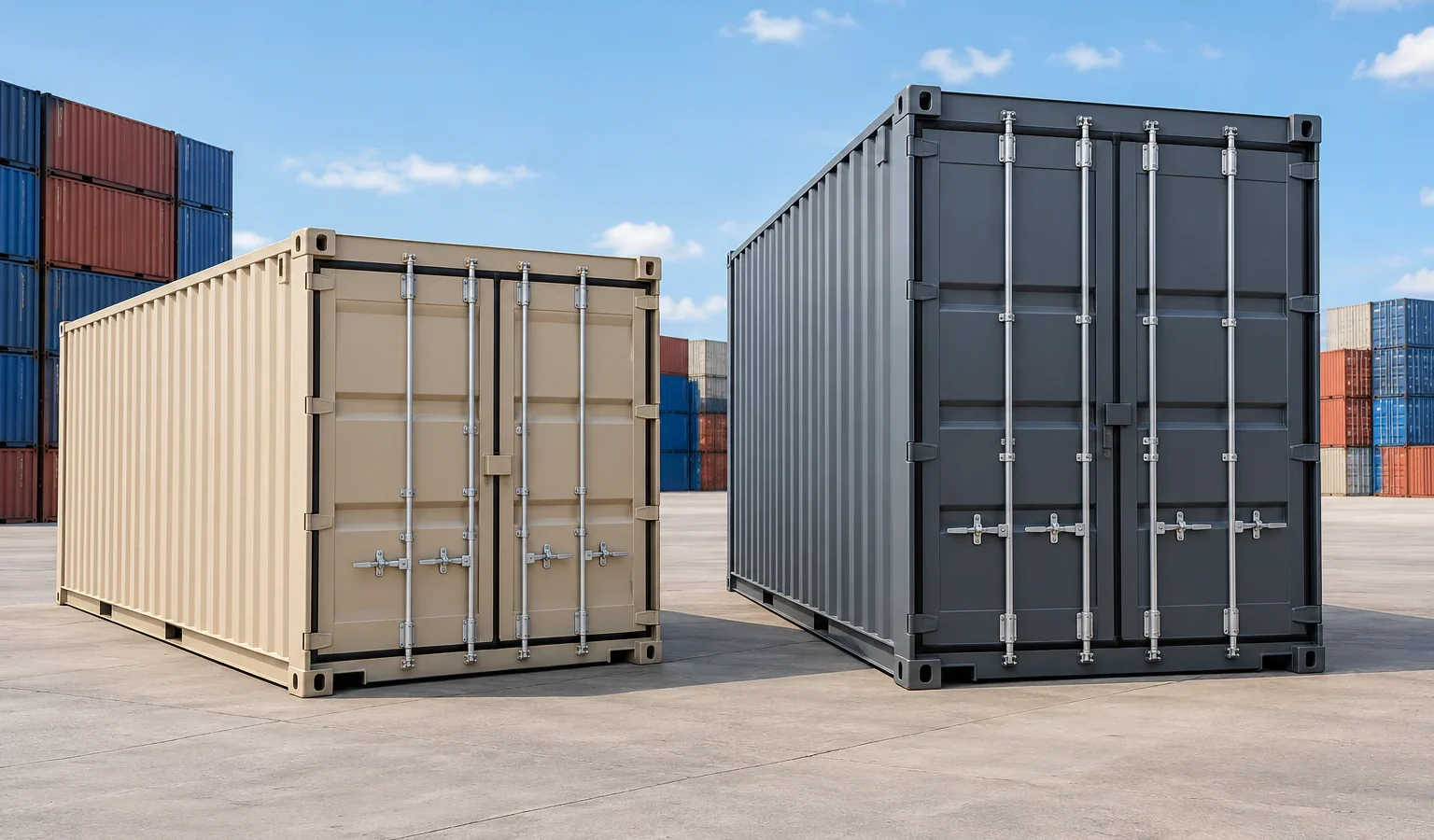

Choosing between a standard-height shipping container and a high cube container sounds simple until the unit has to fit a real job. The extra height can be useful for bulky storage, racking, equipment, or a conversion layout. It can also affect site access, transport planning, and the way the finished space feels.
The right choice is not automatically the tallest container. It is the unit that suits what you need to store or build, the route into the site, and the condition you want to buy. This guide gives buyers a practical way to compare standard and high cube containers before requesting a quote.
The Simple Difference: One Foot of External Height
For common dry containers, a standard unit is generally 8 feet 6 inches high externally, while a high cube is generally 9 feet 6 inches high externally. That additional foot is the main distinction buyers notice first.
The exact internal clearance, door opening, tare weight, floor condition, and construction details can vary by container, manufacturer, age, and condition. If a measurement is critical to your project, ask for the details of the specific unit being quoted rather than relying on a generic chart.
That distinction matters because a container is not only a steel box. It needs to reach the site, sit on suitable ground, open properly, and work for the way you plan to use it.
When a Standard-Height Container Makes Sense
A standard-height unit is often the straightforward choice when the priority is practical, secure storage rather than additional interior headroom. Many buyers start with a standard 20ft or 40ft container because it is a familiar format and can suit tools, materials, equipment, seasonal inventory, and site storage.
Consider a standard-height container when:
- Your stored items do not need extra vertical clearance.
- The site has tight overhead conditions such as branches, eaves, gates, or other fixed obstacles.
- You want to compare new and used options in the most common container format.
- A simple storage layout matters more than interior volume.
A standard container is not inherently a lesser option. It can be the more sensible fit when the site is constrained or the contents do not benefit from extra height.
If you are also deciding on length, read 20ft vs. 40ft shipping containers. Length and height solve different problems: a 40ft standard container gives more floor length, while a high cube changes vertical clearance.
When the Extra Height of a High Cube Helps
A high cube container can be valuable when vertical space is part of the project brief. The additional external height may make a noticeable difference for tall stored goods, shelving plans, interior finishes, or a conversion concept where ceiling feel matters.
High cube containers are commonly considered for:
- Bulky equipment or storage layouts that use vertical shelving.
- Projects where an extra sense of interior headroom is important.
- Commercial or workspace concepts that need room for planned finishes or services.
- Container conversions where the design brief needs to account for insulation, lighting, or interior build-out.
Extra height does not automatically mean that a high cube is the right fit. It still needs to be practical for delivery access and the location where it will sit. A buyer should explain the intended use rather than requesting a high cube solely because it sounds larger.
For a commercial page focused on this option, see 40ft high cube shipping containers for sale. That page is the right place to request a quote after you have decided the added height is useful.
Compare the Whole Project, Not Just the Container Height
Before choosing a unit, work through the decision in this order.
A Quick Decision Framework
Use a standard-height container when the project is straightforward storage, the access route is tight, or the extra vertical space would not change how the unit works. Consider a high cube when the interior needs to accommodate taller stored items, vertical shelving, a more generous workspace feel, or a conversion plan that will add finishes below the roofline.
Neither answer replaces a review of the specific container. A quote conversation should establish the proposed size, height, condition, intended use, delivery location, and anything that needs to be confirmed about the individual unit. That keeps the decision tied to the buyer's actual project rather than a generic preference for the largest available option.
Why Nominal Measurements Are Only a Starting Point
External dimensions are useful for the first comparison, but they are not a complete specification. Interior clearance is reduced by the container structure and can be affected by the unit's construction. Door openings, floor condition, ventilation, previous repairs, and planned interior work can change what is practical for a particular use.
This is especially important for a high cube conversion. An extra foot of exterior height does not translate into a fixed amount of finished interior headroom after a project adds insulation, ceiling systems, lighting, or service runs. For storage, the same question appears in a different form: will the planned shelves, pallets, equipment, or loading method fit through the door and work comfortably inside?
Ask for the measurements that matter to your project. A supplier should be able to explain what is known about the proposed unit and what needs confirmation before purchase. If your plan has a tight tolerance, use a site professional or project designer where appropriate rather than relying on a general online guide.
How Height Affects Different Uses
Storage and Yard Equipment
For tools, boxed goods, maintenance supplies, or yard equipment, the key question is often floor layout and door access rather than ceiling height. A standard-height container may be entirely suitable when items are loaded at ground level and arranged along the sides or on moderate shelving.
A high cube can become more appealing when storage is deliberately vertical. Before selecting it, consider how items will be loaded, whether lifting equipment is available, and whether the site can accommodate the proposed delivery. Extra space only helps when the loading and access plan can use it safely.
Construction and Project Sites
Site use can involve tools, materials, secure storage, or a shell that will later be adapted for an office or other project purpose. In these cases, condition, door orientation, placement, and access may be just as important as height. A high cube may offer useful room for certain equipment or a future interior plan, while a standard unit may be easier to place where overhead access is limited.
Describe the site use in the quote request. It is more useful than simply saying that the container is for a jobsite, because it gives the supplier context for discussing size, condition, and delivery planning.
Office and Commercial Concepts
For an office shell or cafe concept, height can influence how the space feels after any planned interior work. It is not evidence that a high cube is required. A standard-height unit can still be appropriate for a compact project, while a high cube may provide more flexibility when the plan calls for a different interior arrangement.
The key is to keep the sales scope clear. The container, modifications, technical services, equipment, permits, and interior finish may be separate elements of a project. Confirm what is included in the particular quote instead of assuming that a container marketed for an office or cafe arrives as a completed turnkey unit.
1. Start With the Use
Describe what will go inside the container. A buyer storing boxed inventory, landscaping equipment, or jobsite tools may need a different solution from someone planning an office shell, a food-service concept, or a refrigerated application.
If storage is the main need, the shipping containers for sale hub can help you compare the core options. If the goal is a workspace, review office containers and describe the required layout rather than assuming particular fit-out features are included.
2. Decide Whether Condition Matters More Than Height
The choice between new/one-trip and used is separate from the choice between standard and high cube. A new or one-trip unit may be preferred where appearance, a cleaner presentation, or a particular project brief matters. A used unit may be appropriate when its condition matches a practical storage use.
Read the new one-trip vs. used shipping containers guide for the condition decision. If you are considering a used unit, use the used shipping container inspection checklist to understand what should be checked before purchase.
3. Check Site Access Before Selecting a Tall Unit
Container delivery planning should happen before the order is finalized. Look at the route from the road to the placement area, not just the final pad. Overhead obstacles, gates, turns, slopes, ground conditions, and the preferred door direction can all affect whether a proposed delivery is workable.
The extra height of a high cube makes this check especially important. Do not rely on a generic clearance number for a particular truck or delivery method; share site details and photos when requested, then confirm the delivery plan with the supplier.
Use the shipping container delivery site preparation checklist before requesting a delivery quote. It covers the buyer-side questions that are easy to miss when the purchase decision is focused only on container size.
4. Separate Shell Requirements From Fit-Out Requirements
For an office, cafe, or another conversion project, start by defining the shell and opening requirements. Then identify which parts of the project need to be confirmed separately, such as interior layout, electrical work, plumbing, HVAC, finishes, appliances, permits, and branding.
MS Container Solutions should not be assumed to provide a complete turnkey fit-out unless that scope is agreed in writing. The cafe containers page explains this distinction for a commercial kiosk or food-service shell. Being precise about the project scope helps avoid a quote that compares unlike options.
Standard vs. High Cube: Buyer Questions to Answer Before a Quote
Provide these details when you contact a container supplier:
- Preferred length: 20ft, 40ft, or another format if the supplier confirms it is relevant.
- Height preference: standard or high cube, and why the added height matters.
- Condition preference: new/one-trip, used, or guidance needed.
- Quantity needed.
- Delivery ZIP or exact site area.
- Intended use: storage, site equipment, office shell, kiosk/cafe shell, reefer requirement, or another legitimate project use.
- Site access notes: gate width, overhead obstacles, turns, ground condition, placement direction, and any known restrictions.
- Project-specific questions that need confirmation before purchase.
This information does not create a guarantee of availability, price, delivery timing, or configuration. It gives the supplier a clearer basis for discussing the options that may suit the project.
Avoid These Common Mistakes
Choosing Height Before Looking at Access
The extra foot of a high cube can be useful inside, but it cannot solve an access restriction outside. Review the route and placement area first.
Treating All Used Containers as the Same
Used containers can differ in condition and previous use. Ask what is being quoted and use a buyer inspection process appropriate to your plans.
Assuming a Conversion Includes Every Feature
A container shell, a modified shell, and a completed office or cafe can involve very different scopes. Ask what is included and what needs separate planning.
Comparing Only the Initial Quote
The best comparison includes the unit type, condition, required openings or modifications, delivery planning, and the practical fit for the site. A low headline figure without those details may not answer the actual buying question.
Request the Right Container for Your Project
If you know whether a standard or high cube container suits your project, the next step is a clear quote request. Share the size, condition preference, intended use, and delivery ZIP so the conversation can focus on the correct type of unit.
For a commercial starting point, explore new shipping containers, used shipping containers, or request a shipping container quote.