
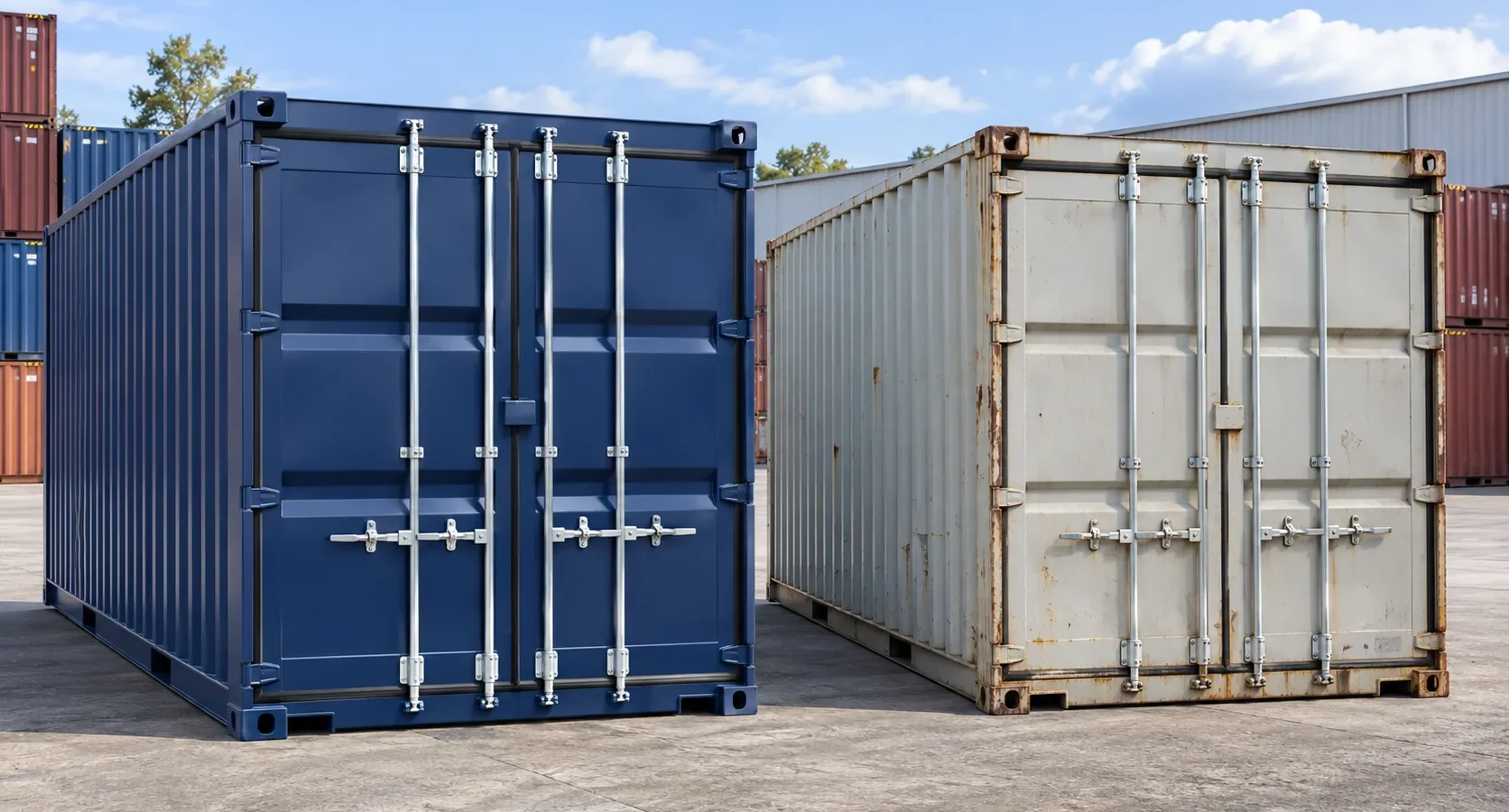

Choosing between cargo-worthy vs wind and watertight containers starts with one practical question: will the container stay on your property for storage, or does it need to enter an international freight chain? The labels sound similar, but they answer different buyer needs. A wind and watertight container is commonly chosen for stationary storage when keeping ordinary weather out is the priority. A cargo-worthy container is generally discussed in connection with structural condition and freight acceptance requirements.
Neither label should be treated as a promise that every container looks new, comes with the same paperwork, or is right for every project. Used containers have individual histories. The best purchase is the one whose documented condition, intended use, size, delivery plan, and inspection results match what you actually need.
Cargo-Worthy vs. Wind and Watertight Containers: The Short Answer
For typical ground-level storage of tools, seasonal inventory, equipment, or materials, a wind and watertight unit can be the practical fit when its roof, walls, doors, seals, and floor are sound. If you need to use a container for an ocean or intermodal freight move, the requirements become more specific. Confirm current acceptance requirements with the carrier or freight professional before buying; a seller’s informal description alone is not a shipping booking.
Think of condition terms as a starting point for questions, not as a replacement for an inspection. Ask the supplier how the offered container was assessed, what documents are available, whether the unit has a CSC safety approval plate, and whether the proposed use is stationary storage or transport. That conversation prevents buyers from paying for a freight-related condition they do not need—or assuming a storage unit can automatically be used for export.
What Wind and Watertight Usually Means for a Storage Buyer
Wind and watertight, often abbreviated WWT, is a practical storage description. Buyers typically use it to identify a container expected to keep normal wind and rain from entering through the roof, walls, doors, and seals. That makes it relevant for a farm, jobsite, business yard, household overflow, or other stationary storage situation. It does not mean cosmetic perfection. Scuffs, faded paint, repaired areas, dents, and surface rust can be normal on a used container if they do not compromise the container’s practical storage function.
Because terminology can vary between sellers and markets, ask what is included in the assessment. Does the condition check include the roof, door gaskets, locking bars, floor, wall panels, and threshold? Is the unit being sold as the actual container shown in photos or as a condition grade from inventory? Are repairs disclosed? A good quote conversation gives you a clearer expectation than a short label in a listing.
A WWT designation also does not answer every question about the interior. If you are planning a specialized use, ask about odors, stains, prior cargo history where known, and floor condition. Storage of ordinary equipment is different from a finished conversion, a food-related project, or an application with building, health, or environmental requirements. Use qualified professionals for requirements outside general container sales guidance.
What Cargo-Worthy Means—and What It Does Not
Cargo-worthy is commonly used for a container assessed as suitable for freight service under applicable criteria. The phrase is connected to structural condition and transport standards, not to attractive paint or a spotless interior. A cargo-worthy unit can still show the ordinary cosmetic evidence of prior handling. Conversely, a container that looks clean from outside may not meet a carrier’s current acceptance requirements.
For shipping, documentation and current acceptance matter. The Container Owners Association explains that cargo-worthy shipper-owned containers are expected to meet relevant criteria and display a valid CSC safety approval plate plus the applicable examination information. Carriers, terminals, insurers, and national rules can add their own requirements. That is why a buyer should obtain current confirmation from the party handling the move instead of relying on an old plate, an online listing, or a general explanation of cargo-worthiness.
Do not confuse a CSC plate with a permanent guarantee that a container can be accepted for every future shipment. Its status, examination information, repair history, route, cargo, and the carrier’s requirements all matter. If international freight is the goal, discuss the exact plan before purchase. If the goal is simply storage on a site, paying for freight-oriented condition may not add useful value.
Compare the Two Options by Intended Use
| Planned Use | Questions to Prioritize | Likely Starting Conversation |
|---|---|---|
| Stationary jobsite or property storage | Dry interior, working doors, sound floor, security, delivery access | Wind and watertight condition may be appropriate. |
| Business inventory stored on site | Condition, security, floor load, size, placement, insurance needs | Match the unit to the contents and site risk. |
| International freight movement | Carrier acceptance, CSC information, current inspection and documentation | Confirm cargo-worthy requirements before buying. |
| Conversion or finished interior project | Floor, odor, coatings, structural modifications, local code and design needs | Start with condition, then consult qualified specialists. |
The table is a decision aid, not a certification. A container seller can help explain available inventory and condition descriptions, but the buyer should provide the actual use case. Mention whether the unit will be stationary, loaded with heavy equipment, shipped, modified, or accessed frequently. Include the preferred size, delivery ZIP, and site constraints when you request a quote.
Inspect the Same Practical Areas Either Way
Regardless of the condition label, inspect the container systematically. Start outside with the corner posts, top rails, lower rails, roof line, and wall panels. You are looking for damage that may affect the container’s shape or weather resistance rather than judging every dent as a failure. Then operate both cargo doors. Handles, locking bars, cams, hinges, and gaskets should work without unsafe forcing. A door that does not close squarely can affect security and water resistance.
Inside, inspect the floor, side walls, ceiling, and door end. Look for moisture, daylight entering through unintended openings, deep floor damage, persistent odor, or areas that require a better explanation. The floor deserves particular attention because it supports the planned contents. Our shipping container floor condition guide explains what to look for in soft spots, repairs, fasteners, and signs of water exposure.
For a fuller sequence, use the used container inspection checklist. It covers roof, walls, doors, seals, floor, frame, and questions to ask before accepting a particular unit. If you cannot inspect in person, request current images of the actual container when available and make sure the seller understands which features matter to you.
Do Not Buy More Condition Than the Project Requires
Many buyers start by comparing the container price alone. A better comparison includes condition, delivery, site readiness, security needs, future use, and likely maintenance. For a simple stationary storage need, an appropriate WWT unit may be more sensible than a freight-oriented option. For a container that must move through a freight chain, choosing a unit without confirming acceptance can create delays and replacement costs later.
One-trip containers provide a separate choice. They have generally made one cargo journey from the manufacturer and may be preferred when a newer appearance, a cleaner-looking interior, or less prior handling is important. They still need to be matched to the project rather than treated as automatically necessary. Compare new one-trip shipping containers and used shipping containers based on the actual use, desired appearance, and condition expectations.
Size and Delivery Still Matter
Condition is only one part of a useful purchase. A 20ft container often works well where access is limited or the storage plan is compact. A 40ft container offers more interior length for larger inventory or equipment. Neither size is automatically better; measure the contents and plan the delivery approach before deciding.
Prepare the site so the delivery vehicle has suitable access and the container can rest on stable, well-drained support. Door orientation matters too. Consider which end should face the working area, whether there is space to open both doors, and where water will drain. The delivery site preparation checklist explains the practical questions to resolve before delivery day.
Questions to Ask Before Accepting a Quote
- Is this quote for a new/one-trip, used WWT, or cargo-worthy container?
- What does the stated condition include, and what normal wear should I expect?
- Is the unit intended for stationary storage or can current freight documentation be discussed?
- Can you confirm the roof, doors, gaskets, floor, and frame condition?
- What size fits the contents and delivery site?
- Are there access, ground, or unloading issues to address before delivery?
- What photos or inspection details are available for the actual unit?
Clear answers make it easier to choose a container for the work in front of you. When you are ready, request a shipping container quote with your size, condition preference, intended use, delivery ZIP, and site-access details. That provides useful context without assuming a condition grade will solve every buying decision.
Maintain the Condition You Buy
A container’s practical storage value depends on continued care. Keep debris from collecting on the roof, watch for new rust or damage, operate the doors periodically, and make sure water drains away from the lower rails. Address a small leak or a stiff door before stored items make the problem harder to find. The shipping container maintenance checklist offers a regular inspection routine for roofs, doors, seals, supports, and corrosion.
Maintenance does not convert a storage unit into an automatically freight-acceptable container, but it can protect its useful life on site. Keep condition notes and photographs when a container is used for valuable inventory or when repair work is completed. That record can help future inspections, insurance conversations, and resale decisions.
Understand the Paperwork Before Freight Is Planned
Freight paperwork is often where a casual use of condition terms becomes a real issue. A container identification number, a CSC safety approval plate, photographs, repair history, and a seller description can all be relevant, but they do not replace the current instructions from the carrier or the professional arranging the move. Ask what needs to be supplied before a booking is made and leave time to resolve any inspection or repair requirement. A last-minute decision to ship a container that was purchased only for storage can be more complicated than it first appears.
The Container Owners Association’s shipper-owned-container guidance explains that cargo-worthy acceptance can involve applicable criteria, a CSC safety approval plate, and examination information. That is useful background, but a buyer should treat the carrier’s current answer as controlling for a particular move. Conditions can also differ between routes, container types, cargoes, and jurisdictions. Avoid building an international shipping plan around a generic claim that a container is cargo-worthy.
Keep copies of any documents received with the purchase. If a container is repaired after delivery, retain invoices and photographs showing what was done. This is not a substitute for a formal inspection, but it creates a more useful record than relying on memory. For a stationary unit, the same habit can help when evaluating maintenance, insurance questions, or a later resale.
Consider Condition Alongside Security and Access
A weather-resistant container can still be a poor fit if its doors are difficult to operate, the lock is exposed, or the delivery location leaves the door end inaccessible. Decide how frequently people will need entry and which direction the doors should face. Make room for the doors to swing and avoid placing the container where debris, parked vehicles, or standing water will block the threshold. Those everyday details affect whether the container remains useful long after delivery.
For valuable tools or inventory, review door hardware and decide whether a compatible lockbox, lock, lighting, camera, or access routine is appropriate. No single accessory makes a site theft-proof. The practical goal is to keep the container in sound working order and make unauthorized access more difficult and visible. See our shipping container security guide for lockbox, lock, door, and site-control considerations.
Access also affects inspection. Before accepting a delivery, open and close the doors, inspect the threshold, and walk the floor while the container is empty. Once it is filled with stored material, it becomes much harder to identify a small leak, a damaged floor area, or a problem with the door seals. An early inspection gives you a baseline for future maintenance.
Use a Simple Decision Process
First, write down the primary use: stationary storage, business inventory, a project requiring a newer-looking unit, or an intended freight move. Second, identify non-negotiables such as size, door operation, dry interior, security, delivery access, and required documentation. Third, compare available containers against that list instead of comparing only age or paint condition. A used WWT container may satisfy every need on one list, while a different project genuinely requires confirmation of freight suitability.
Next, ask what cannot be verified remotely. If the floor is important, obtain current photos or inspect it. If freight is important, verify the requirements with the party that will accept the container. If local placement is difficult, confirm the truck route, turning space, and ground preparation before delivery. Each step reduces the chance that a condition label becomes a costly assumption.
Finally, choose the level of condition that serves the actual project without relying on marketing shorthand. A container is a practical asset when its condition, size, site plan, and intended use line up. It becomes a difficult purchase when one of those decisions is deferred until after delivery.
Frequently Asked Questions
Is cargo-worthy the same as wind and watertight?
No. Wind and watertight commonly describes a container suited to keeping ordinary weather out for storage. Cargo-worthy is associated with freight suitability and may involve current inspection, documentation, carrier, and route requirements.
Can I use a wind and watertight container for overseas shipping?
Do not assume so. Confirm the current requirements with the carrier and freight professional before buying or booking, including documentation and container acceptance criteria.
Does cargo-worthy mean a container looks new?
No. Cargo-worthy relates to condition for freight purposes, not cosmetic appearance. Used containers can show prior handling wear while still being assessed for a particular purpose.
Which condition is best for storage?
For many stationary storage uses, a sound wind and watertight container can be appropriate. The right choice depends on the contents, site, budget, security needs, and any specialized requirements.
What should I inspect before buying a used container?
Check the roof, walls, corner frame, doors, locking hardware, gaskets, floor, and signs of leaks. Ask for clarification on repairs and inspect the actual unit when possible.