
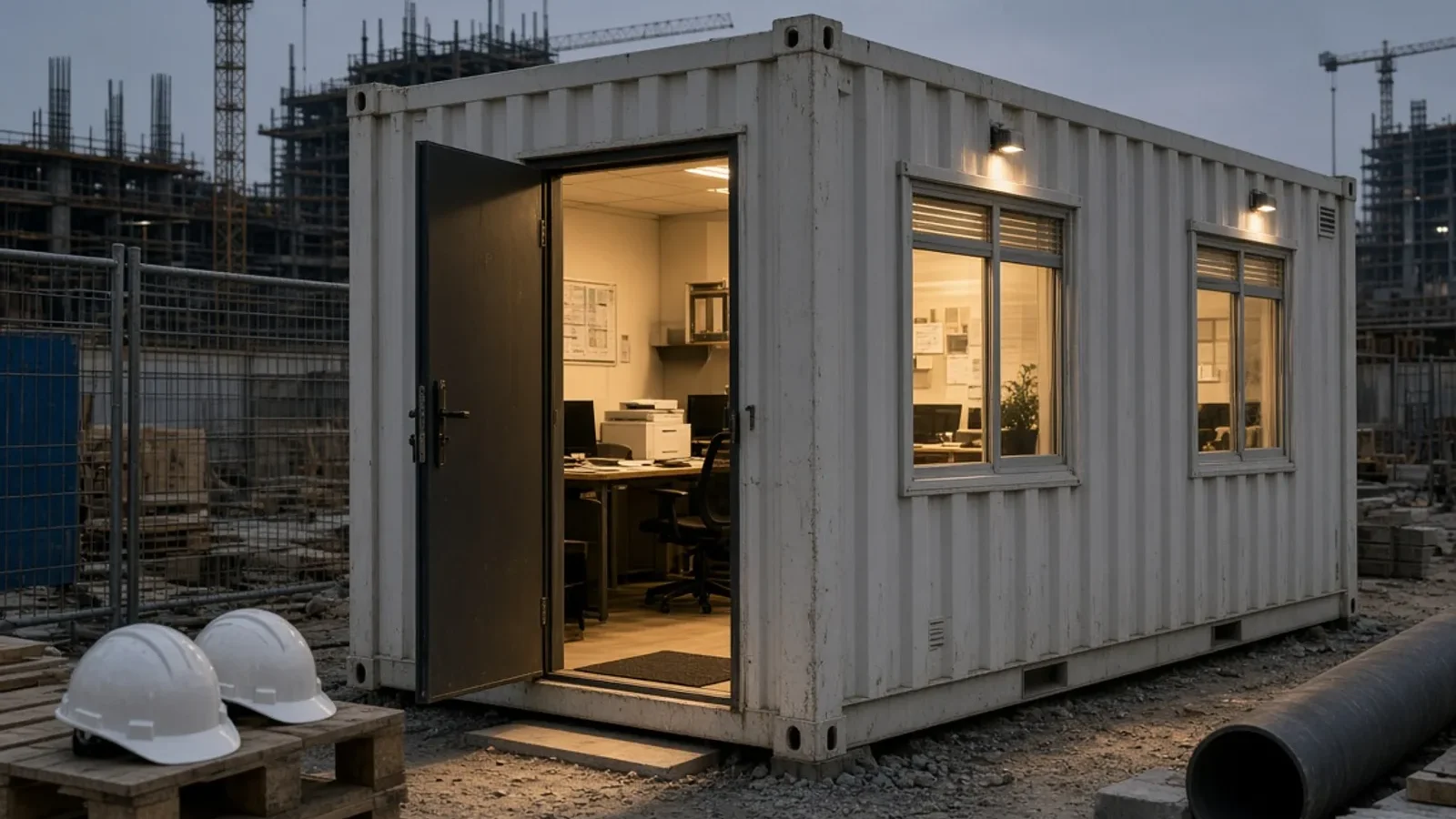

Project teams specify shipping container offices when they need relocatable people space with stronger security than a fabric tent and faster deployment than stick-built site trailers in some programs. From superintendent offices to security posts and compact meeting rooms, shipping container offices work when openings, insulation, power notes, and delivery access are planned together—not bolted on after the shell arrives.
Explore the dedicated office containers page and the broader shipping containers catalog. Shell sizes commonly start from 20ft, 40ft, and high cube platforms. For equipment background, see Intermodal container; size families are outlined on ISO 668.
What shipping container offices typically include
At minimum, usable shipping container offices need a personnel door, daylight openings or equivalent lighting plan, weather sealing after cuts, and a path for electrical and HVAC as required by your site rules. Finishes range from basic painted interiors to insulated walls, flooring upgrades, and partitioned rooms. Scope control is everything: a shell with openings is not the same product as a turnkey office.
- Site superintendent / GC offices
- Security and gate houses
- Compact meeting or break rooms (where codes allow)
- Sales or leasing offices on development pads
- Hybrid storage-plus-office layouts on larger compounds
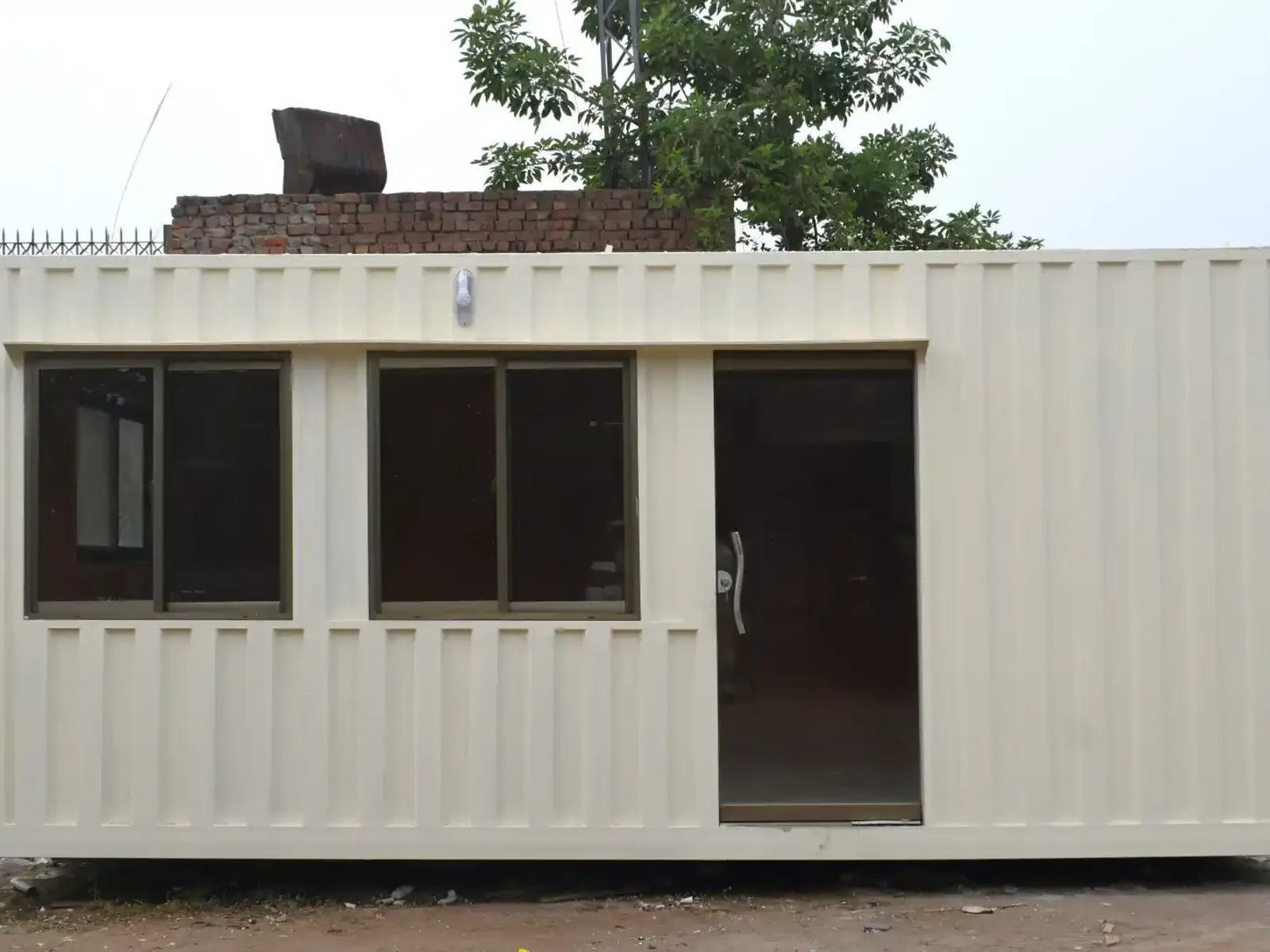
Always confirm local permitting, egress, and occupancy expectations with your GC or facility manager. This article focuses on commercial planning for shipping container offices shells and delivery—not legal advice.
Choosing a shell size for shipping container offices
A 20ft shell suits one to two workstations with careful furniture planning. A 40ft shell supports larger desks, a small meeting table, or a split office/storage layout. High cubes help with ceiling-mounted services and a less cramped feel. Size tradeoffs mirror storage decisions—see 20ft vs 40ft shipping container—but circulation space for people matters more than pure cube.
| Office goal | Common shell | Planning note |
|---|---|---|
| 1–2 desks | 20ft | Watch door swing and desk depth |
| Team + small table | 40ft | Plan aisle clearances |
| Taller feel / services | 40ft high cube | Confirm overhead clearances on site |
| Office + secure store | 40ft partitioned | Define partition and door schedule early |

Condition path: new vs used shells
Newer and one-trip shells often reduce cosmetic prep before insulation and finishes. Sound used units can still become solid shipping container offices when structure and floors check out—especially for back-of-house compounds where exterior marks matter less. Compare grades in new one trip vs used shipping containers and product pages for new and used containers.
Budget context for shells and haul—ranges only—sits in shipping container cost USA. Fit-out can exceed the shell depending on electrical, HVAC, and finish level, so separate those lines in procurement.
Openings, insulation, and power notes
Cut locations should respect structure and desired furniture layouts. Windows for daylight, a personnel door for egress, and optional HVAC openings need a clear drawing—even a simple sketch helps. Insulation and interior lining change comfort dramatically in hot and cold US climates. Electrical rough-in should follow your electrician’s design and site temporary power plan.
Teams that treat shipping container offices like empty storage boxes usually discover missing outlets, poor ventilation, or awkward door swings after move-in. Spend an hour on a bubble diagram before steel is cut.
Delivery and placement for people spaces
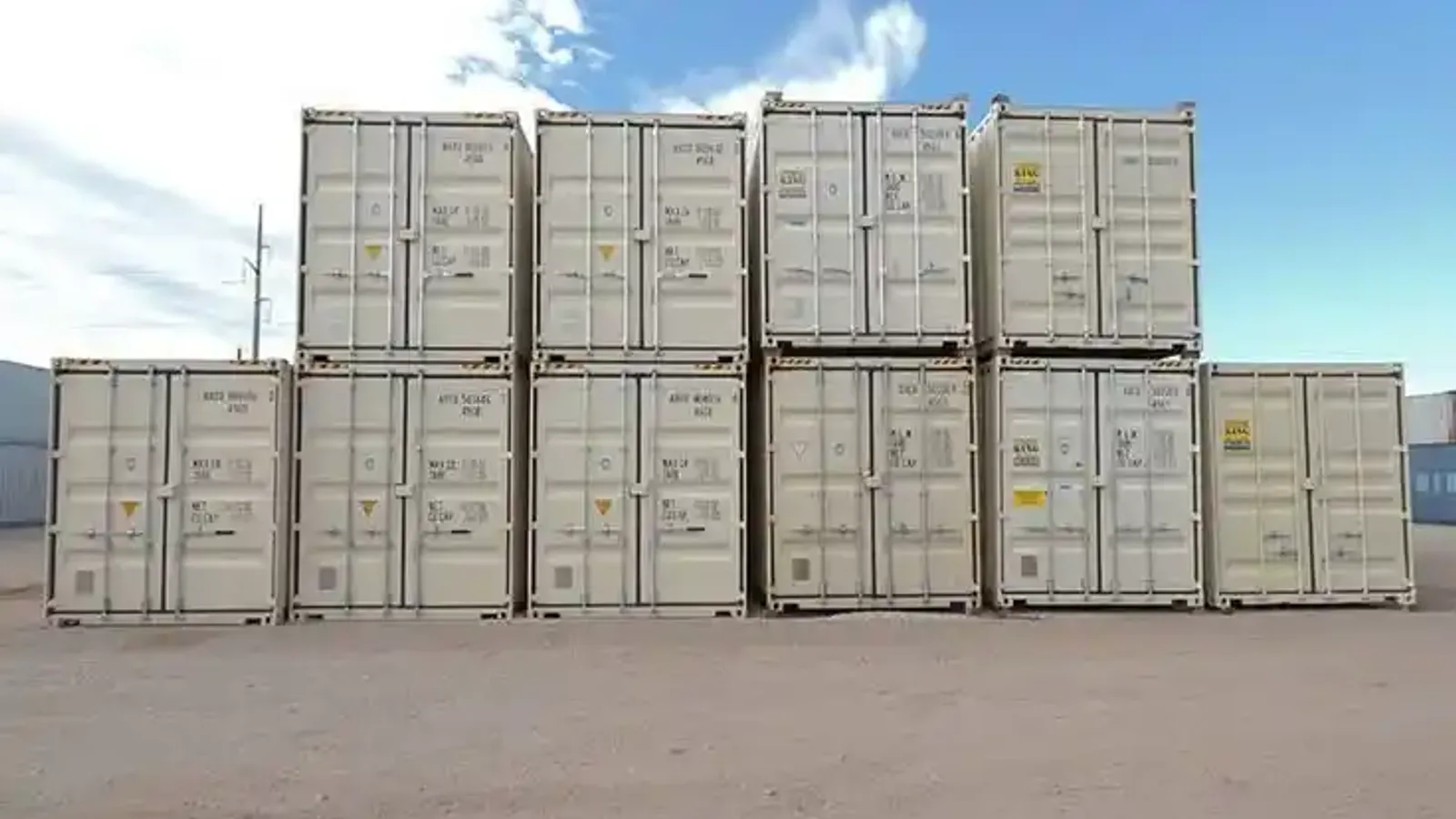
Office units still arrive as heavy steel boxes. Share gate width, overhead lines, soft ground, and final orientation so doors face walkways and ADA or site circulation routes as required by your project. Crane days and tight urban pads change cost and schedule. Service areas are summarized on locations; send details through the quote form.
If the same compound also needs bulk materials storage, keep office and storage units on a shared plan so truck routes do not block each other. Many sites pair shipping container offices with nearby shipping containers for storage rather than forcing one box to do both jobs poorly.
Operational tips after placement
- Anchor or ballast per engineer/GC guidance for your wind region
- Keep exterior stairs and landings clear of mud and ice
- Protect door thresholds from forklift traffic on shared pads
- Schedule filter and HVAC maintenance if climate equipment is installed
- Document keys, alarm codes, and after-hours access early
These habits keep shipping container offices productive for the full project duration instead of becoming neglected after the first month.
Brief MS Container Solutions clearly
Include headcount, desk count, must-have openings, insulation expectations, power/HVAC notes, size preference, condition path, and delivery ZIP. Say whether you need a shell-only path or a discussion of office-oriented configurations. That turns a vague interest in shipping container offices into a quotable scope.
Browse more planning pieces on the blog, then submit the quote when your bubble diagram and access photos are ready. Clear inputs produce clearer options for USA project sites.
Furniture, IT, and day-one usability
Measure desks, filing cabinets, and plotter depths before you freeze openings. A personnel door that swings into the only aisle ruins a layout that looked fine on a napkin sketch. Plan data drops and Wi-Fi as deliberately as power. Many shipping container offices fail on day one because someone assumed “we will figure out the network later” while the superintendent needed prints and radios immediately.
Acoustic comfort matters on noisy jobsites. Interior lining and door seals reduce equipment roar; they will not make a box silent next to a crusher. If calls and meetings are constant, place the office away from the loudest plant and consider a second quiet room in a larger shell. Those placement choices belong in the same brief as the steel specification for shipping container offices.
Safety, egress, and site coordination
Coordinate smoke detectors, extinguishers, and egress paths with your safety plan. Keep stairs and landings clear of materials staging. If the office doubles as a muster point, post maps and emergency numbers inside. None of this is glamorous, but it is how professional programs run shipping container offices without turning them into cluttered storage closets.
Share the office location on the site logistics plan so concrete trucks and deliveries do not block the only exit. A five-minute coordination meeting between the superintendent and the logistics lead prevents most access fights after the unit lands.
Multi-office campuses and growth paths
Large projects sometimes need a cluster: GC office, owner trailer equivalent, security post, and meeting room. Modular steel shells can stage that campus over months. Standardize door hardware and keying where possible. Leave space between units for stairs, HVAC clearances, and cable trays. Growing a campus of shipping container offices is easier when the first unit is placed with the tenth unit in mind.
If the program may convert later into storage after demobilization, say so early. Door and window schedules for people space differ from blank storage walls. Knowing the second life of the asset can change whether you invest in heavier finishes or keep the fit-out deliberately light.
Climate comfort across US regions
A coastal humidity profile differs from a high-desert swing or a northern winter. Insulation thickness, HVAC tonnage, and vestibule habits should match the region—not a one-size catalog package. Shade, color, and orientation also change heat load on dark steel. When you brief shipping container offices for Texas heat versus Midwest cold, say so explicitly so openings and mechanical notes are not guessed.
Temporary power quality matters too. Brownouts and generator noise affect both computers and people. Coordinate with the electrician on panel location, exterior disconnects, and cable protection so the office remains usable during peak site demand. Comfort failures are among the fastest ways crews abandon otherwise sound shipping container offices.
Who owns maintenance during the project
Assign a single owner for filters, door hardware, and housekeeping. Shared “someone will handle it” ownership usually means nobody does. A monthly walk-through checklist—locks, stairs, HVAC, extinguishers—keeps small issues from becoming move-out punch lists. That discipline costs little and protects the schedule value of well-placed shipping container offices.
At demobilization, photograph interiors and exteriors before haul-away. The record helps with deposit or resale conversations and informs the next project’s grade choice.
Used thoughtfully, shipping container offices give teams secure, relocatable workspace that can move with the schedule. The projects that succeed treat openings, comfort, and delivery as one system—the same discipline that separates a durable office from a steel box with a desk wedged inside.
Frequently Asked Questions
Are shipping container offices turnkey by default?
Not always. Confirm whether you are buying a shell with openings, a partially fitted unit, or a fuller office scope.
Is a 20ft large enough for two people?
It can be with careful furniture planning. Larger teams usually need 40ft or high cube shells.
Do I need permits for a site office container?
Requirements vary by locality and occupancy. Coordinate with your GC or facility manager early.
Should I start with a new or used shell?
Newer shells often reduce cosmetic prep; sound used units can work for back-of-house compounds when inspected.
Can an office container also store tools?
Hybrid layouts exist, but dedicated storage boxes often work better for heavy forklift traffic. See storage guidance on the blog.
How do I request an office container quote?
Send headcount, openings, insulation/power notes, size, condition path, and ZIP via the quote form.